back About Our Yarns Virtual Yarns


THE ALICE STARMORE® HEBRIDEAN YARN STORY

They delight in marled clothes, specially that have long stripes of sundry colours; they love chiefly purple and blue. Their predecessors used short mantles or plaids of divers colours, sundry ways divided; and amongst some, the custom is so observed to this day...

This quotation from 1582 vividly illustrates the fact that Highland & Island Scots have worked with wool and made cloth for centuries. Ancient implements for combing wool have been found in brochs and other early settlements that date back two-thousand years. By the time of the 16th century quotation above, a cloth known as 'quhyte plaiding' constituted a type of currency in the Outer Hebrides, since the native population usually had little or no money. The Hebrideans were entirely self-supporting. Cloth was woven for domestic use and any excess was traded or bartered. The rent for their land was often paid in this form. By 1656, woven materials were certainly exported from the Hebrides, as recorded by one Thomas Tucker who wrote a report in that year entitled On the Revenues of Excise and Customs in Scotland. Exports from "the Isles and Westerne parts" were shipped up the Clyde to Glasgow and consisted of "pladding, dry hides, goate, kid and deere skyns, which they sell, and purchase with theyr price such commodityes and provisions as they stand in need of, from time to time."

The yarn for the cloth was hand-spun by the women from their own sheep. This activity was eulogised by ministers of the church in the Outer Hebrides, who clearly believed that non-spinners were sinners. This is a recurring theme in the Statistical Account of Scotland penned by parish ministers from 1791 to 1799.

Mrs Mackenzie of Seaforth, whose zeal for the good of her people is conspicuous upon all occasions, has erected two spinning schools, with a salary of £6 Sterling to each of the mistresses. To aid her in this laudable undertaking, the Honourable Society resolved to pay one half of the said salary. The girls are taught gratis, have 10d. for every spindle they spin, and to encourage them, they have their wheels at a low rate; many of the poorest have them gratis. She allows 2lb of coarse lint for themselves to begin with; besides, as a spur to industry and emulation, annual competitions are held, when premiums are given to the best spinners.

So wrote the Rev. Donald Macdonald of the parish of Barvas in the Isle of Lewis. The Mrs Mackenzie he referred to is Lady Seaforth, wife of the proprietor of the island. The Honourable Society is the Society For Propagating Christian Knowledge.

The Rev. Alexander Simson of the Lewis parish of Lochs takes up the theme:

To encourage the young women to acquire the perfect knowledge of spinning there is an annual competition at each of the (spinning) schools, and premiums given by Mrs Mackenzie to the best performers, for the purpose of exciting a laudable emulation... The memory of the haughty, and, of course, the cruel-hearted daughters of dissipation, shall be utterly forgotten, or if mentioned, shall be mentioned with abhorrence.

The Rev. Colin Mackenzie of the parish of Stornoway comments on this activity, that:

...many poor girls have been rescued from habits of idleness and vice, and trained to industry and virtue.

While I don't entirely believe that my female ancestors were the wild band of gals portrayed, the reverend gentlemen make the point that daughters of dissipation or no, they certainly did a lot of spinning. Experience and skill in all processes of wool and cloth manufacture are deeply rooted in Hebridean culture.

The earliest methods involved scouring the fleece in soft, peaty water, dyeing with local plants and lichens, hand carding, blending colours, spinning and weaving. It was the unique, almost magical blending of colours into the yarn that caught the imagination of Lady Dunmore - Catherine Herbert, widow of the Earl of Dunmore. The Earl purchased the estate of Harris in 1835 from the ancestral clan owners, the Macleods, for the sum of £60,000. He died in 1843, and his widow did not lose interest in the estate. She noticed the quality of the local cloth, saw the potential, and gave directions for weavers to copy the Murray tartan, which she then had made into clothing for the estate gamekeepers and ghillies. This eventually set in motion the largest cottage industry in Great Britain - the production of Harris Tweed, which confusingly is made in all islands of the Outer Hebridean chain and not just Harris. Lady Dunmore sponsored local women to travel to the Scottish mainland, where in weaving towns like Alloa they learned improved techniques.

Equally important were Lady Dunmore's society connections, which she exploited to the full in order to promote Harris Tweed amongst the upper crust hunting, fishing & shooting set. The island tweed was even adopted by those in Queen Victoria's royal circle, and the image of the tweedy country gentleman was born. Through her efforts and those of various philanthropic organisations, Harris Tweed was firmly established by end of nineteenth century, not only as an industry but as a product with historical, social and artistic value - it became a status symbol to possess it. The humble Hebridean plaiding had come a long way.

The importance of Harris Tweed to the Hebridean economy cannot be underestimated: it was ranked with fishing as a major island industry. The weaving yarn was eventually produced industrially in the mills of Stornoway, and then sent out to be hand-woven by self-employed weavers throughout the island. It was this hand-woven aspect - preserved against all odds - that gave it such unique status in the world of textiles. The looms are not so much powered by hand as by foot, and it takes quite a level of stamina to work one all day. The weavers are all self-employed, owning their looms and operating from loom sheds adjacent to their homes. Experiments were conducted whereby looms were purchased in quantity and installed in the mills for operation by weavers on wages, but this model did not prove successful. Hebridean weavers like to be their own bosses.

The clackety-clack of the pedal looms can still be heard from barns and sheds from Barra to the Butt of Lewis, but not to the same extent as when I was a child. The Harris Tweed industry became cyclic with booms and slumps, but the good years became good times for all. My father Thomas Matheson was keen to "come ashore" in the 1950s. He had been at sea since the age of fourteen, as a fisherman, then on coastal patrol in the Royal Navy from 1939 to 1945, then as a fisherman again. Tweed gave him the opportunity to realise his wish, and he became chief engineer at Newall's Mill in Stornoway, his job being to maintain the yarn-processing machinery. As a little girl, I would often accompany him to the mill, where I would be fascinated to see the great piles of yarn that had been dyed but not yet blended and spun, and they seemed to me to resemble beautiful clouds of candyfloss. Things went well, particularly in the sixties when my father was able to buy his first car at a time when they were rarities among British working men. Bales of tweed were piled high on the quays of Stornoway, awaiting export. Town brats like myself would swarm all over them, for they were wrapped in hessian and were rather like big, comfy couches on which we could bounce and jump. We were chased off time and time again but we always returned, drawn by the sheer fun of it and the wonderful woolly smell. Of course, the inevitable slump followed. Newall's went bust as the seventies dawned, as did various other mills, and my father was out of a job. Harris Tweed has been drifting in and out of fashion ever since. One year it is back against the ropes; the next it is out there and punching.

The rise of high-tech fabrics and sportswear in the last twenty years has inevitably had a detrimental effect on traditional textile industries, and Harris Tweed is certainly no exception. Added to this, the Harris Tweed industry has recently suffered from the encroachment of rogue companies who have misappropriated the Harris Tweed name (much more on this story soon). By a wonderful twist of irony, the industry is now engaged in producing large orders of Harris Tweed for Nike, the sportswear company.

Harris Tweed weaving yarn has a different twist to knitting yarn. It is a twist specially used for weaving, as the yarn has to be tough enough to take the tension of warping on a large piece of machinery. This has not stopped Hebridean women from knitting with it however, and the garment known as the Harris ‘bobban’ jumper has been the curse of many a poor husband and son for decades. The term ‘bobban’ is Gaelic for the bobbins on which the weaving yarns are wound, and the garments knitted from it - while they will certainly keep you warm - are guaranteed to irritate not just your skin but the very core of your being. As one long-suffering wearer once commented: to wear Harris bobban you need the skin of a dogfish.

The aim of my daughter Jade, and I was to create our own yarn specifically for knitting and stitching. To do this we collaborated with Donald Macleod, who is the most highly skilled yarnmaker in the Hebrides. He understood our detailed creative and technical requirements, and was more than willing to work with us in order to create our dream yarn.

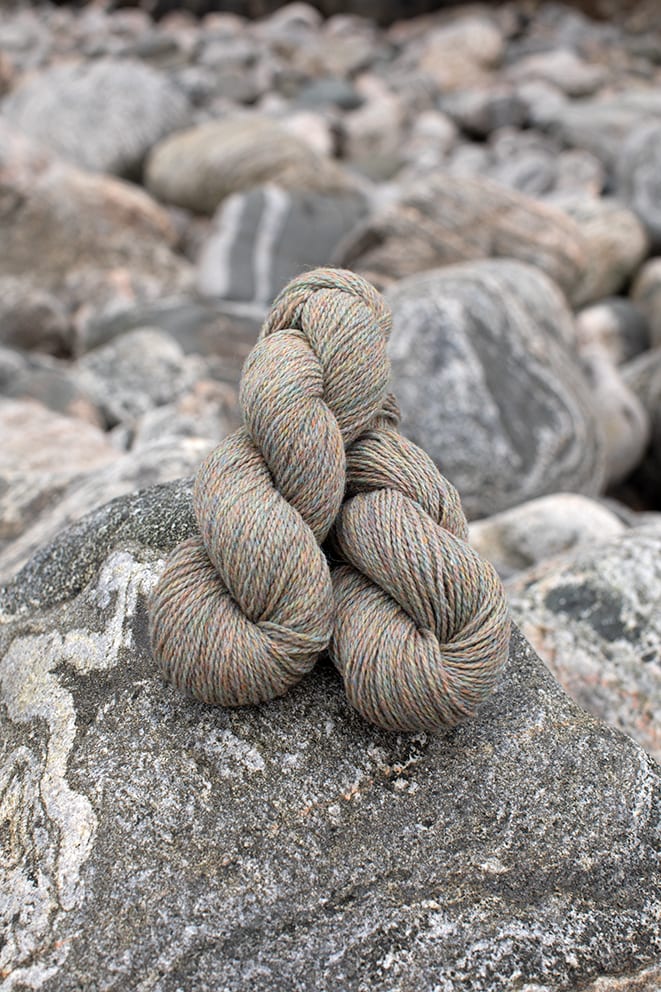
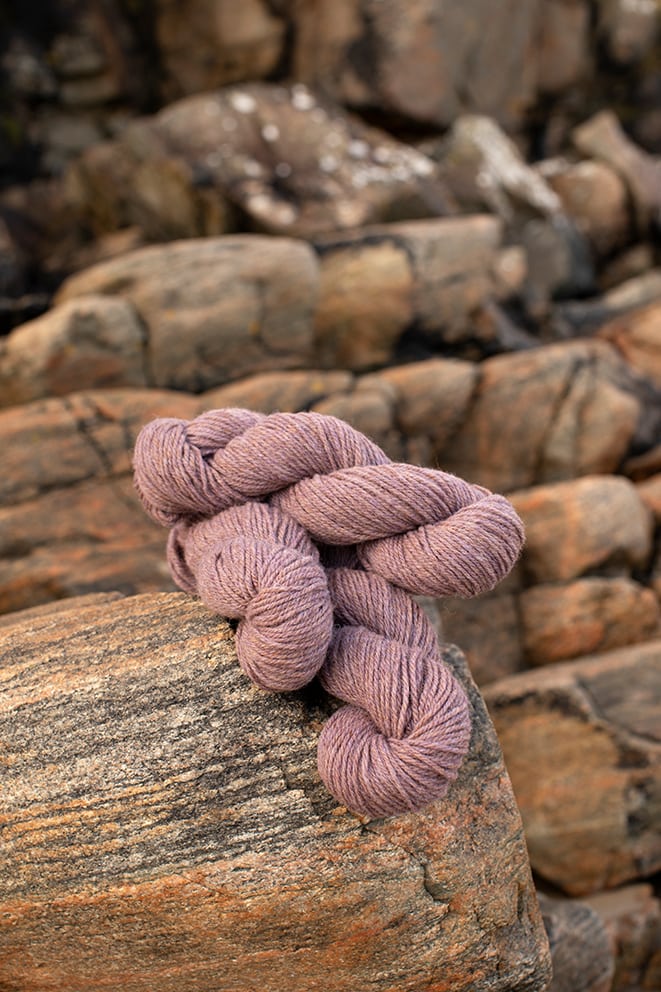
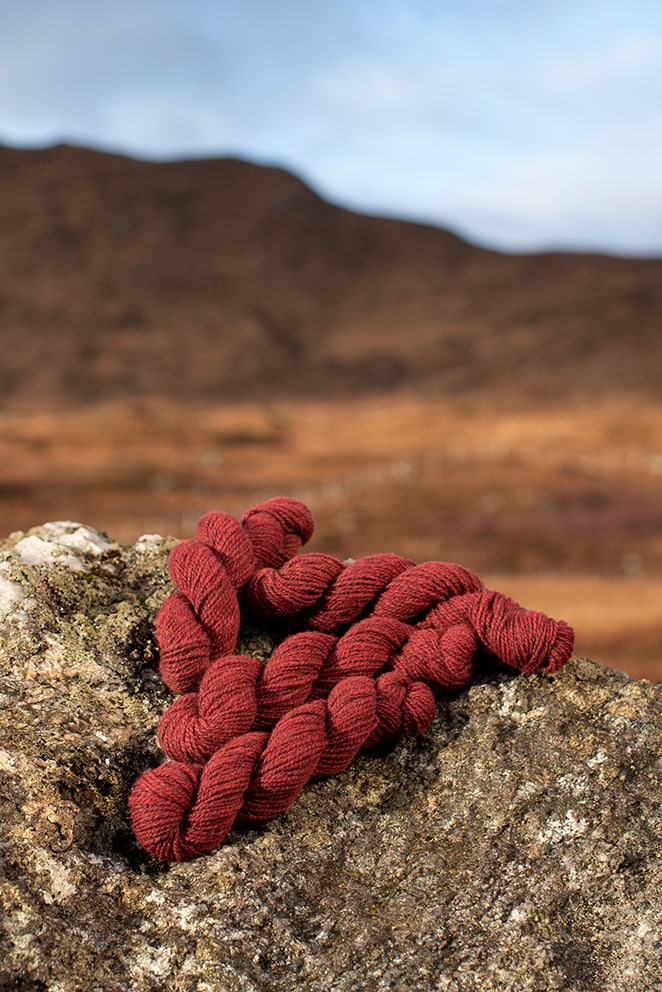
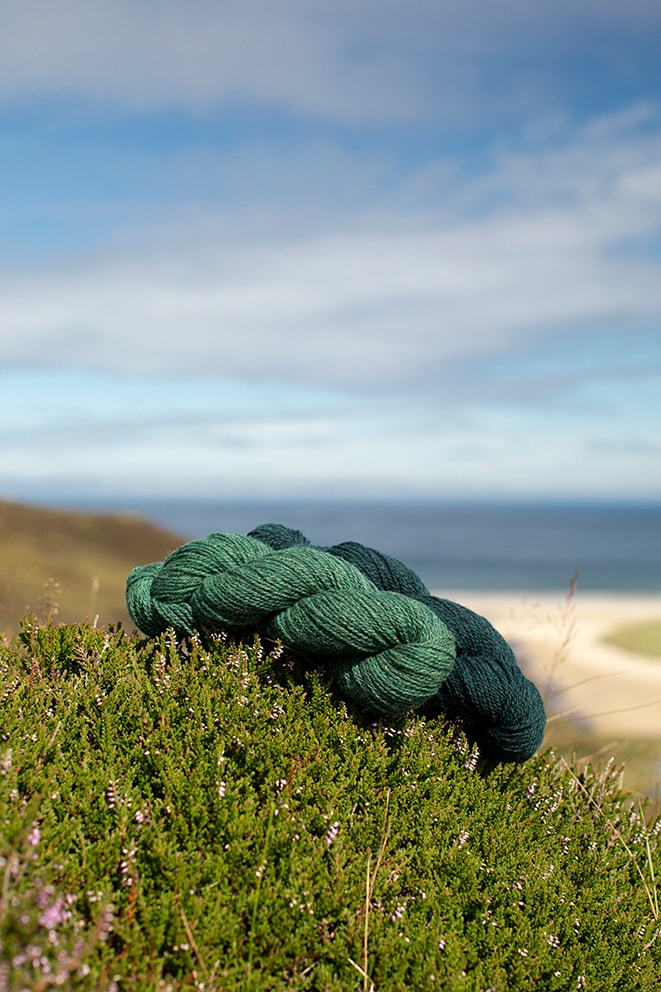
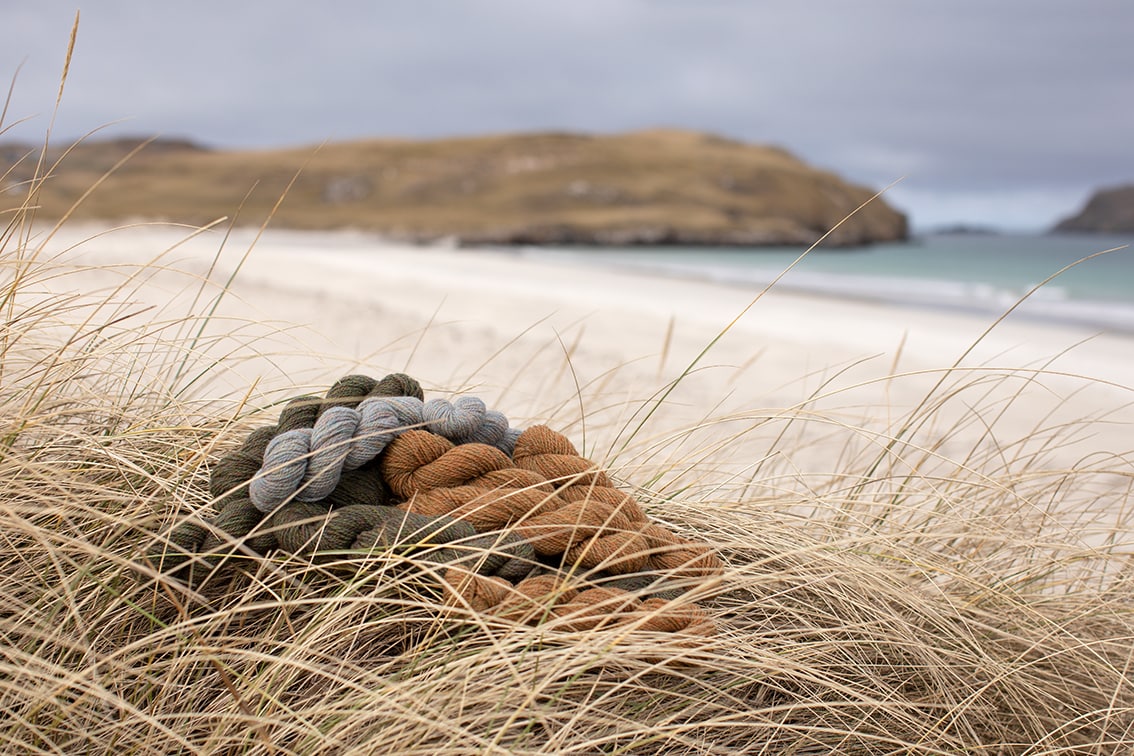
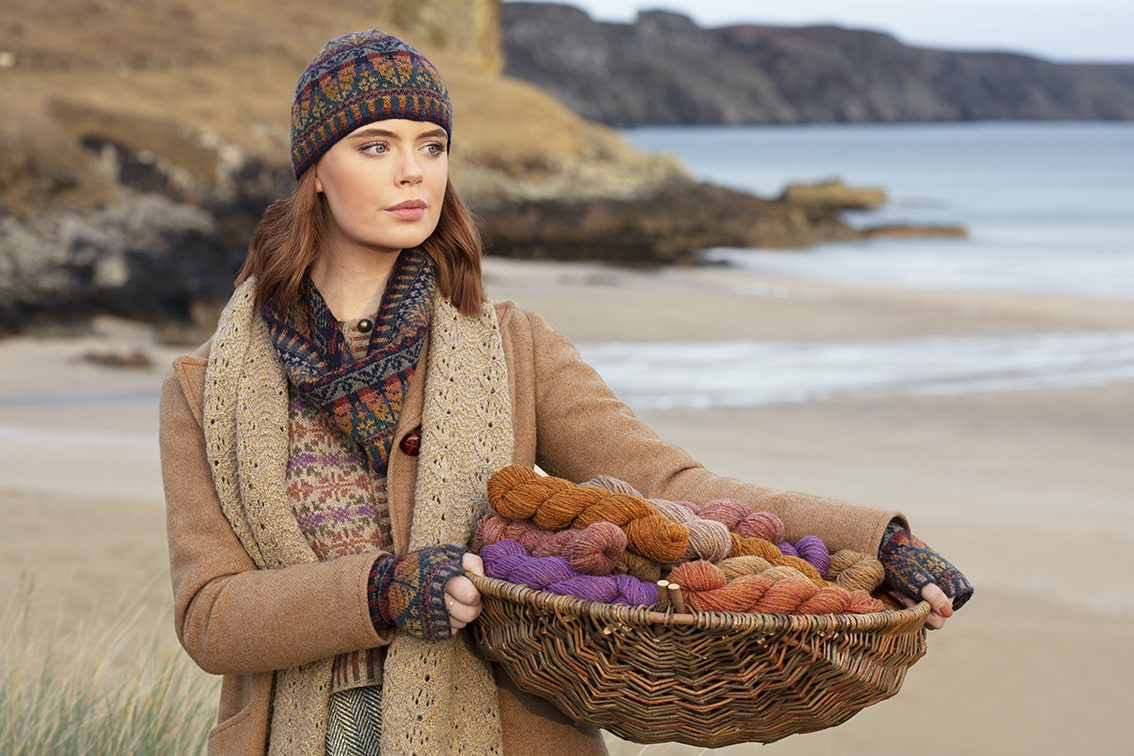
We make Alice Starmore® Hebridean yarns from our own special blend of finest quality British wool. Like the yarn for the tweed, it is dyed in the wool and not in the skein. It is then combined into blends which are exclusive to our range: you may read about them in my Hebridean Colour Stories. We work closely with Donald Macleod on every batch of yarn that we make, from the purchase of the raw wool, through to blending, spinning and finishing. We take exceptional care with our yarn. It is hand-washed and dried outside in the open air, right beside the Atlantic, on the west side of Lewis. When our yarn is skeined, it is checked to eliminate knots as much as humanly possible, since we well know - being knitters and stitchers ourselves - how annoying such flaws can be.

Each unique shade is available in Alice Starmore Hebridean 2 Ply. A smaller range of shades is available in Alice Starmore Hebridean 3 Ply.

Using our combined skills, Donald Macleod, Jade and I, have created a unique range of yarn. We have taken the natural environment around us in order to create our palette. There are 36 colours, and because of the complexity of each shade, the effects of combining them are infinite. They shift and change and glow with life, just like the natural world they represent. Designers will quickly appreciate the potential that is at their fingertips for making dynamic colour combinations.

Welcome to our Hebridean world. If you want to know how we developed our unique shades then go to Hebridean Colour Stories and start stravaigin. The meaning of that incomparable Scottish word will become clear early on.

Alice Starmore

HOME | NEEDLEPOINT | ABOUT | DESIGNS | SUPPORT | DRIFTNET | ORDERING | COLOUR STORIES

Copyright © 2001-2010 Virtual Yarns. Site by ReefNet.