|
|
|||||||||||||||||||
|
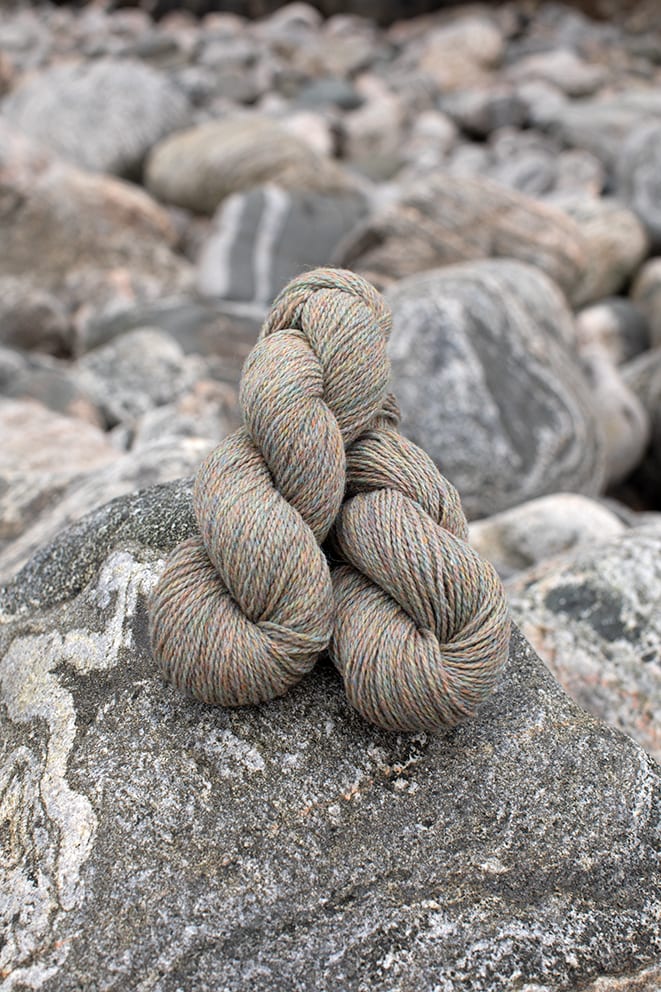
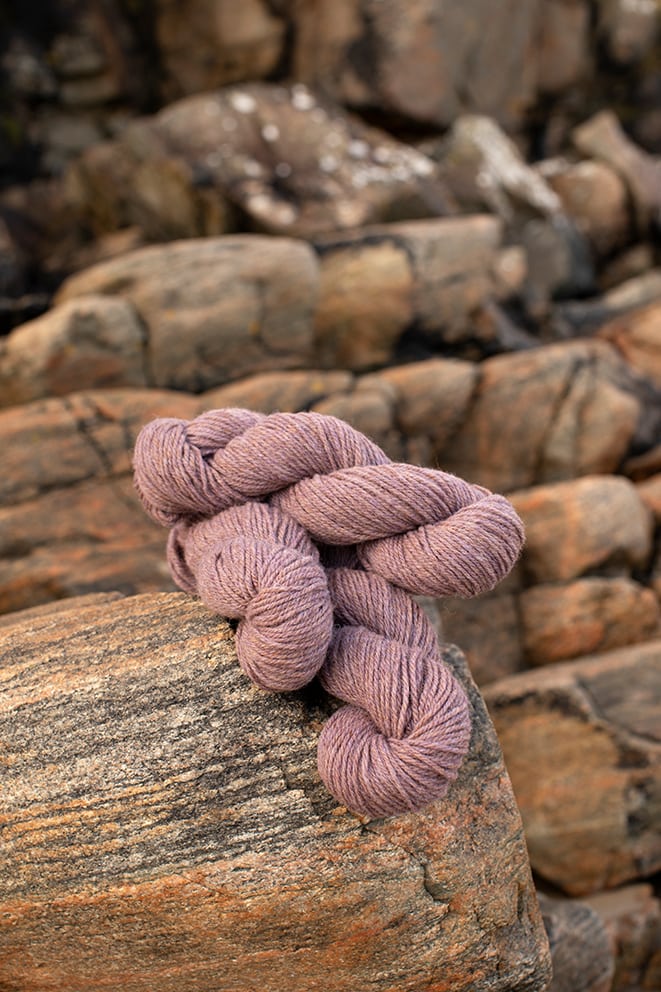
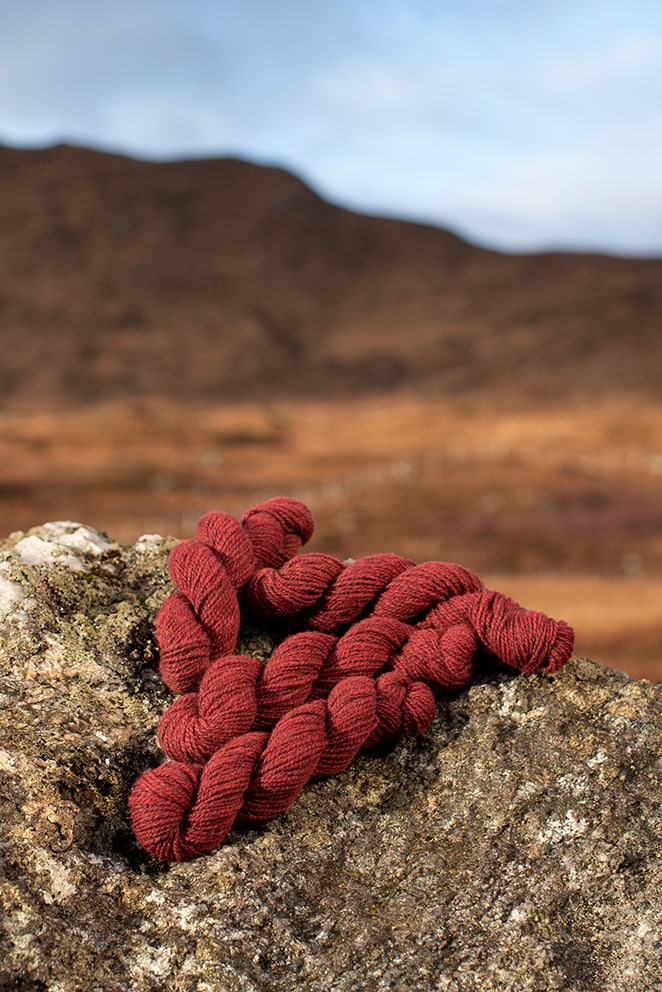
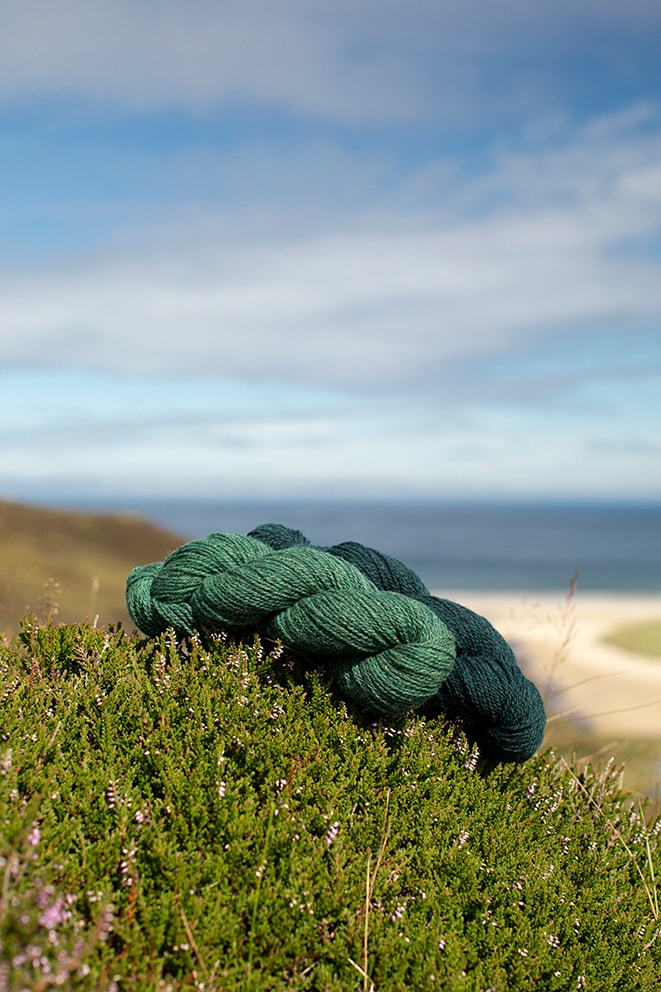
A HARRIS YARN by Alice StarmorePart 1Truly original creative thought is not an everyday occurrence. Good concepts are in short supply, which is why they are stolen on such a depressingly regular basis. The problem is as old as the hills: if you reach eminence in any creative field then you will almost certainly be imitated, and it is also highly likely that your work and ideas will be plagiarized or stolen. I know this from hard experience, and was under the impression that over my thirty-year career as a professional designer I had witnessed all of the dirty tricks prevalent in the textile business. I was wrong. In 2000 my daughter and I decided to create our own completely new yarn concept: our dream yarn for knitting and stitching. It was carefully planned to be not just a yarn product but a complete concept that would involve journalism, photography, drawing, painting, story-telling and poetry. We called it the Hebridean Yarn Concept, since every unique colour in our palette of yarns was to be inspired by some aspect of our native islands, and each would be backed by its own colour story. The medium for the concept was to be a commercial website that would distribute our yarn range worldwide. By the end of 2000 we had much of our material written, and we had a firm specification of the colours, characteristics and quality that we wanted in our Hebridean Yarn. In order to realise our vision we needed a yarn producer of the highest calibre, and Donald Macleod was ideal for our purpose. I knew him by reputation as one of the best yarn makers in Scotland. He had founded a Harris Tweed company called Donald Macleod Ltd (DML) in 1982, which operated from Carloway Mill. He understood the type and quality of yarn we needed; knew how to put together the colour blends that we described, and was willing to make the yarn to our rigorous specification. A contract was signed between us and yarn production began. The contract was with Donald Macleod the individual, and not with DML. In developing our colour range, we provided Donald with either story boards or story boxes containing combinations of natural objects animal, vegetable and mineral that we selected from around the islands. Donald Macleod used his considerable experience, skill and flair to emulate them. Thus, each of these colours is the focus of a strong Hebridean story. As readers of this site know well, there are 36 colour blends in total, divided into inspiration groups such as moor and mountain, sea and shoreline. Our entire Hebridean Yarn Concept was launched on 17th August 2001, when the Virtual Yarns website went online. The feedback for the site was instant and favourable. We had e-mails describing it as "like walking into a story" and "an enchanted knitting book". We started to receive e-mails from non-knitting expatriate Scots who said that looking at the site was like a trip home. This proved to us that we had achieved exactly what we had set out to do. Donald Macleod left DML on 31.10.01. The company still bore his name but he was no longer involved in it, apart from the fact that he was owed a substantial sum of money. Donald continued - and still continues - to fulfil his contract with us, and he remains the skilled and highly-valued maker of our Hebridean Yarn. DML continued to operate as a Harris Tweed company under the control of its remaining directors, and obtained six-figure sums of public money in the form of loans. Public sources of these loans include the Department of Trade and Industry, and the Western Isles Council, which is our local administrative authority (more on these loans later). DML went into liquidation on 17.11.03 with these loans - together with sums due to trade creditors - outstanding to the tune of around half a million pounds. The list of creditors includes Donald Macleod, the Western Isles Council and the HTA. I was mildly interested in the news reports at the time, but did not think much of it as it was nothing to do with us. With hindsight, large alarm bells should have been ringing in my ears. In March 2004 a lady who knits for us phoned. She had been called by one Stephen Mackay of Shawbost, Isle of Lewis, who works at the Carloway Mill. He offered her "more than whatever she pays" to knit up some designs. The "she" being me. He also claimed to have a superior knitting yarn; it would be much better to work with, and there were a whole lot of wonderful new designs to work on. The knitter declined the offer, but her curiosity was aroused. It is hard to keep things under wraps on a Hebridean island as everybody gets to know about everything sooner or later: usually sooner, as the bush telegraph is awesomely efficient. The knitter wanted to see these amazing new yarns and designs, especially as she knew Stephen Mackay had no connection with knitting whatsoever. Although neither she nor any ladies who knit for us took up the offer, she knew women who decided to give it a try. These knitters were duly given various knitting patterns, copyright to one Di Gilpin and dated over a decade ago. The superior new yarn turned out to be cones of unwashed Shetland 2 ply: liquidation stock from Hunter of Brora. Knitters from this part of the world have been very familiar with "the Brora" for generations; my granny used to send her fleeces there and get spun yarn back in payment. Did Stephen Mackay really think that Lewis knitters were so stupid that they would not recognise this well-known standard yarn? I received samples of what the ladies were using and was instantly able to confirm it as 18 cut standard Shetland yarn, manufactured by the now defunct Hunter of Brora. I knew the exact shade numbers as I possess a complete range of labelled Hunter samples from years back. Judging by what was handed out by the Carloway Mill to make the garments, they had acquired the redundant stock that was obviously left over following Hunter's liquidation - lots of greys, yellows, browns & orange, plus a few of the more bilious shades. They included for example, 1248, 1509, 794 and 1106. Many knitters - and manufacturers of knitted and woven products - the world over would recognize these long-standing Hunter colours. The garments had to be knitted using the Brora yarn doubled, straight from the cone, and the task was a nightmare. It is a vast understatement to say that my curiosity was aroused also. What was this Mackay fellow up to? I enquired and the bush telegraph did not let me down. Stephen Mackay had been an employee of the now-liquidated DML. He was now involved in a phoenix company, or companies, that had arisen at Carloway Mill. Also involved were R Cunningham, J Cunningham and D Reid. It was hard to get a grip on what exactly had arisen at Carloway Mill, but whatever the entity was, it had a website. I naturally looked at the site and what I saw astounded me. The site advertised "Hebridean" knitting yarn that would soon be available, based on the rugged beauty of the Hebridean landscape. It was thus immediately clear that our Hebridean Yarn Concept was being copied. It was not only concepts that were being copied. Examination of www.harris-tweed.co.uk showed that the site's "authors" had lifted an entire section of our Virtual Yarns website and were using it word for word, including errors that we had made when writing it. They had copied the whole section from our site, pasted it into their own, and substituted Harris Tweed Textiles for Virtual Yarns. The theft was plain, and the reproduction of the errors was further damning evidence for it. Our business and business concept were being targeted by people who had no scruples about stealing the work of others. The question was, which people? It transpired that there were three separate companies involved at Carloway Mill, and these are the companies against which (along with Rowan Yarns) the Harris Tweed Authority has instituted court proceedings. To simplify this Harris yarn, I will refer to the three as The Carloway Mill Companies. To unravel the tangled skein of who and what these companies are, click the link. You will see from the link that two of the new companies were formed prior to the liquidation of DML. One of these new companies acquired the machinery owned by DML. The exact date of this transfer, and of the value of the assets transferred, has been the subject of query, complaint and discussion between DML's creditors and the appointed liquidators, KPMG Corporate Recovery. These matters are as yet unresolved. What is certain is that the remaining directors of DML managed to walk away from around half a million pounds of debt, while still holding possession of valuable machinery. The Carloway Mill Companies commenced the sale of knitting yarns in 2004. At first, the yarns on sale consisted of that same redundant stock from the Hunter mill in Brora, and it was given the bizarre appellation of "Harris Shetland". I would have previously considered it impossible to pack so much utter nonsense into a two-word phrase, but it was a precursor of Rowan's "Lewis is Harris" fiasco and other similar geographic absurdities. However, there was plenty more nonsense yet to come. |
|||||||||||||||||||
HOME | NEEDLEPOINT | ABOUT | DESIGNS | SUPPORT | DRIFTNET | ORDERING | COLOUR STORIES
Copyright © 2001-2008 Virtual Yarns. Site by ReefNet.